Omm Namo Bhagavate
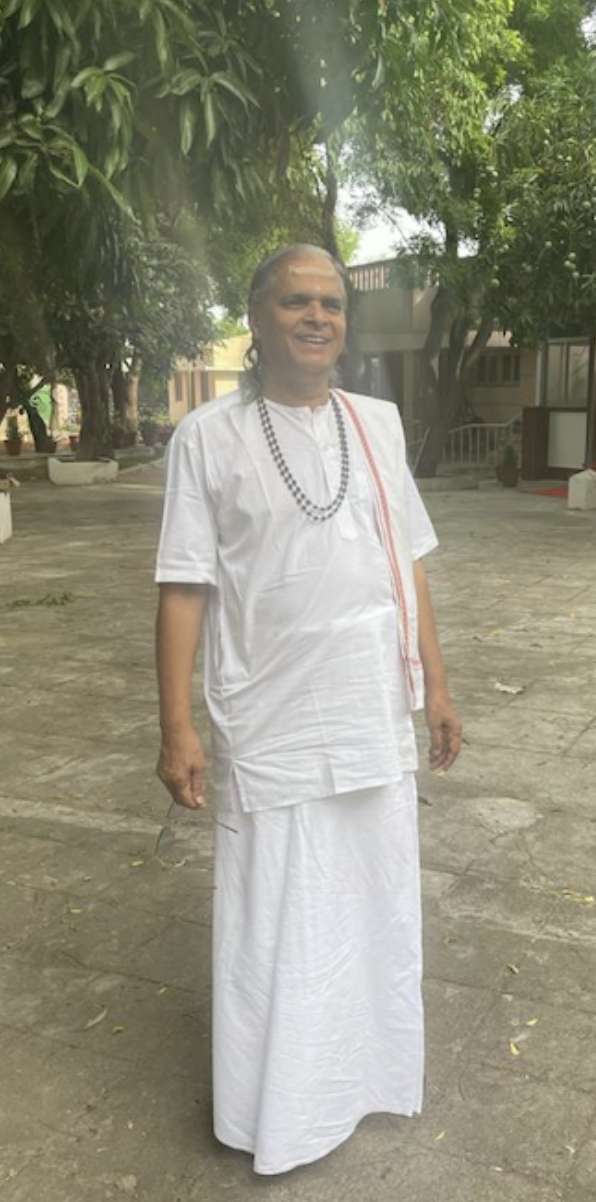
From a January 2012 Interaction on Verse 512 (13.23) of the Bhagavad Gita, at Satyachetana Ashram in Tiruvannamalai, India.

Omm Namo Bhagavate
From a January 2012 Interaction on Verse 512 (13.23) of the Bhagavad Gita, at Satyachetana Ashram in Tiruvannamalai, India.
Omm Namo Bhagavate
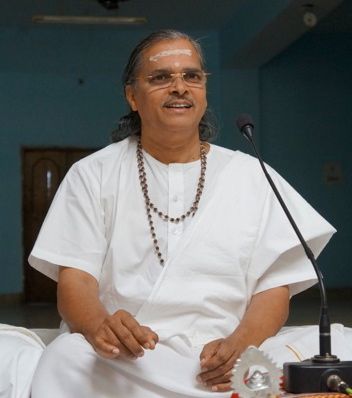
Prakriti is said to be responsible for cause and effect and the sense of doership, while purusha is said to be the cause of the experience of pain and pleasure.
Srimad Bhagavad Gita, Verse 509
Prakriti is the source of all action drive. She creates the process for action and arranges all the factors for the completion of the action. Purusha does nothing. When someone says, “I feel to do this,” that “I” is actually prakriti. Likewise, when we say, “He is not doing this,” the “he” is also prakriti. There is no agency other than prakriti.
Verse 542 says, “When one is able to see that there is no other agent than the three gunas and knows that which is higher than these gunas, he attains My nature.” Between these three factors—seer, sight and the process of seeing—the seer is purusha, and prakriti is the sight. The seer is seeing. Purusha always sees prakriti. The process through which the seer sees the sight is called action. If the purusha, the seer, slightly deviates from this, then the purusha falls from his state of seeing.
Where is the purusha? In the seventh chapter of Gita, Krishna says, “O Mighty-armed, the above eight-fold division is My lower nature. Apart from this there is My higher nature, the universal soul, which is immanent in the embodied being and supports the whole world.” The lower prakriti is the five elements, then mind, intellect, and ego. Among the elements, the first layer is earth, and the attribute of earth is smell: all the sweet fragrances, bad odors, and everything perceived by the nose, which is the organ of smell.
Next is water. The attribute of water is taste—“I am the taste in water”—and tongue is the organ of taste. Fire is sight; its organ is the eye. This is how it goes, layer after layer.
Here is an example. Devashish-the-scientist is the manifestation of the seventh layer of lower prakriti, the intellect. Devashish-the-yogi is which layer—prakriti or purusha? The yogi is the higher aspirational part of prakriti, and it is the higher prakriti—Mahamaya, rather than Yogamaya. Yogamaya is that prakriti that always keeps the purusha in a state of being veiled. It is that aspect of the Mother that always ensures that the purusha is in this eight-fold maya described in Verse 284.
All these eight layers comprise one aspect of maya. Yogamaya is also the mother, and mother grants every wish of the child. If the child is in the level of maya, mother will grant the wish of the purusha who is in the plane of maya. Through her gifts and her charity, Yogamaya ensures that the jiva is in the maya plane.
Anything that is coming from prakriti is targeted to the purusha, whether it is the bonded purusha, the liberated purusha or the supreme purusha. Which prakriti, which mother, will be involved depends on the state of the purusha. If the purusha is focusing on Mahamaya, then it will come from Mahamaya. If the seer is linked with Yogamaya it will come from Yogamaya, and Yogamaya means expanding the maya. The desire for gaining more fame, power and wealth—that is Yogamaya.
If X receives a million-dollar gift, and that purusha then feels that he will purchase a new house or do something for his wife or for his parents, that means it has come from Yogamaya. He has been targeted by Yogamaya. But if the feeling is, “Maybe this money has come for a purpose, and there is a reason for mankind,” then it is from Mahamaya. If the seer is in a state of perfect neutrality, Yogamaya cannot give anything because the seer has transcended the zone of Yogamaya. You can be neutral to maya only when you have transcended maya. Desire, feeling, ambition, aspiration, these are all prakriti, and unless prakriti enters to purusha, purusha is not able to know. Purusha is pure awareness only.
Prakriti has to ascend to enter purusha or purusha has to descend to prakriti for this feeling, desire, ambition or thought to come. Gita says they are the two aspects of the Supreme. One is the manifest; the other is the unmanifest. Their position is parallel. Both are Supreme. When either one goes up or comes down, the state of parallel is disturbed and maya begins; creation starts.
In the beginning these two forces are all-pervading, and it is not possible for either prakriti or purusha to go up, because there is no up and down at that stage. When there is some movement, either in prakriti or in purusha, then two dimensions will come. Until then, it is uni-dimensional.
Who will first make that movement for the unity to become duality, prakriti or purusha? Both are beginningless, but purusha is free from all attributes and prakriti is full of all attributes. Purusha will make the first move because prakriti will send a signal and the purusha will respond to that. Sending the signal is the dharma of prakriti, so we cannot consider that as prakriti’s initiative. If the oil lamp is burning and I put my finger in it, will it spare me because I am the master here? That’s the dharma of fire—to burn. So if I am giving you jnana I am doing nothing great; I am just performing my dharma. If I don’t then I am not a master. If I am clouding you, trapping you, or doing romance or business with you, it means I am not doing my dharma. If I do my work, it is not a karma for me. I am eternally in the state of no karma. Sun giving light, wind blowing—it is their dharma. That’s the highest dharma. That is why Gita says, better to perish while performing your own dharma, but don’t accept others’ dharma.
Prakriti’s dharma is to send signals to purusha. Purusha has no dharma. Purusha is attributeless. All attributes come from prakriti. As many attributes as purusha accepts from prakriti, to that extent purusha becomes prakriti.
In the beginning stage purusha is responding because purusha is the higher Self. Both prakriti and purusha were unmoving in the beginningless beginning. Remaining in that all-pervading stage, prakriti starts movement. Purusha’s response is first to witness, remaining very close, watching what prakriti is doing. Then to consent: knowing fully well that this signal is a call, purusha allows prakriti to give the signal. Then purusha makes the move, coming a little closer to prakriti. They are still in a parallel position. Purusha is moving, not prakriti. Purusha is attracted to prakriti; prakriti is attached to purusha. Anything in us that is attracted is purusha; anything in us that attracts is prakriti.
You all are attracted to Swamiji so you all are purusha and Swamiji is prakriti. At first, you could not know why you were attracted. When the seerhood, comes, you will be able to know why you are getting attracted. Now you are not able to know why because all answers come from the mental plane, but you are attracted by something in me that mind cannot hold nor intellect can measure. That which is beyond mind and beyond intellect is the soul, the awareness. The awareness in me is attracting the awareness in you. If I am not a bigger awareness, how can you be pulled towards me? Like gets attracted to like; the self gets attracted to the supreme Self. That is why, when the merger comes, he who was being attracted withers away in whom he got attracted to, and the duality is gone.
In the beginning, purusha, the attributeless, is getting attracted to prakriti. Prakriti sends the signal. Purusha is first a witness, then consenter, then supporter. Purusha is changing his position, coming very near, until purusha becomes the experiencer or enjoyer. If the purusha becomes the experiencer, then the purusha does not lose its awareness, but if the purusha becomes the enjoyer, it loses awareness. Then a portion of prakriti enters into purusha. This is how the first contamination begins.
You experience or you enjoy a portion of prakriti. Only yogis can see the difference. I can experience the water or I can enjoy the drink. If the purusha becomes the experiencer the purusha will experience, but prakriti cannot enter. When the purusha becomes the enjoyer, it means the purusha forgot his dharma at that time so a portion of prakriti entered into purusha. A hole was made; a little of prakriti entered. Prakriti is attributes. Into the attributeless, an attribute entered. Since the attributeless is a vacuum, this attribute gets a fertile ground to multiply, like cells multiplying. This is how life begins.
Think of how a child is born. A man and woman meet together. A drop of semen is released, and in that drop the sperm race towards the egg at lightning speed. One is able to reach the egg, and fertilization takes place. Similarly, this awareness is coming through millions of rays and entering the tranquil experiential ocean. The union takes place and prakriti gets ecstatic and swells to receive this. A drop of pure awareness from me throws you into ecstasy when it enters you, and hours go by. You are not aware. That is a union. A constant union is happening. Purusha gets surrounded by the swelling prakriti and is overpowered. A portion of prakriti enters into purusha. In this attributeless vacuum a portion of attribute enters. Since there can be no vacuum anywhere in the universe, that which has entered will want to fill the space. Prakriti is now working.
What am I doing through yoga? Like a bottle filled with water, your system is full of attributes: all your samskaras, with a little bit of empty space. The advantage is that you came as a bottle without a lid. An opening was there for me to enter. The bottle is full of experience; only a little is vacuum. That is allowing me to enter. I am experience—not water, but nectar. I, the nectar, will enter if there is a little opening for me. That’s why god is called experience first—the highest experience. That is love. First God is love.
I am entering into you, so I-the-experience is of a different kind than you-the-experience. Because there was an opening in you I am entering, and there is only one way I can enter: that is love. Knowledge is awareness only, whereas the current experience needs to be replaced with new experience, or it needs to be transformed into new experience. That new experience must be love and it must be different than what is already here. Otherwise it can neither transform nor replace this current experience.
I will try my level best to make you me. But you will try your level best to make me you. This is how the play goes. Prakriti will always wants purusha to enter into prakriti, so that it will be all prakriti only. In the ultimate analysis, there is only one absolute. Prakriti wants there to be no duality, so that there will not be something called awareness; it should all be experience. Purusha wants that there should be only awareness. So also, a guru always feels that every disciple must become a guru; every disciple should be a manifestation of the sadguru. And the avatar wants every person to be an instrument.
Since there is an opening, I-the-experience will enter into this experiential container. Only so much room is there, so I have that much freedom, but you have much more freedom. Your resistance will be more, because with that much strength you will resist me. Me, the visible part will be only a little, but me the invisible part is infinite. When a little of Swamiji enters into this bottle of you, the outer forces of maya and darkness and the inner forces of resistance will try to smash this little bit that is visible. If I really am little, these forces can smash me, but if I am not little—if only the tip of the iceberg is visible—then these forces, as much as they want to smash, so much I will enter. This is finite but I am infinite, so these forces will get annihilated, and a time will come when this whole bottle will be filled with I-the-nectar.
Those who have not become one with that infinite, when they enter into the bottle they get swallowed. This is why we see many teachers and masters that have been swallowed by their own people. Without attaining the state of infinity, they wanted to enter into the finite. Purusha loses its awareness when purusha is delinked from the source of awareness, and that delinking happens if purusha will begin to enjoy the attributes of prakriti, rather than experience the attributes of prakriti.
Verse 214 in Gita says: As the lotus leaf does not get wet, although it floats on water, so also, one whose consciousness is linked with the Brahman, the absolute, and is performing all the action—experiencing everything in the plane of maya—cannot be contaminated. If the purusha is experiencing the attributes of prakriti while keeping the consciousness focused on the absolute—that means retaining its state of absolute—the purusha will not be swallowed by prakriti. When prakriti sees that purusha is not getting swallowed, then prakriti will salute purusha. That is Verse 511. Prakriti will acknowledge the purusha and say, “O Great Lord.” Only the prakriti can say it, because beyond that there is no prakriti. Beyond that both become one. After “O Great Lord,” she discards her role as maya, merges in the purusha, and both become paramatma, the highest Self. Remaining in this body, the purusha becomes the highest Self when the supreme prakriti has joined with him. That is why we say the guru is mother and father, but God is mother only. That is why guru is greater than God.
This drama unfolds when Prakriti, who is all attributes, sends the signal and purusha responds. Purusha’s first response is watching what she is doing, not why she is doing it. The moment this “Why?” comes, a portion of prakriti has entered and you are now prakriti, not purusha. Asking, “Why is Swamiji shouting at me,” is prakriti. Whereas just witnessing means you are retaining your state of purusha. As explained in Verse 511: witness, consenter, supporter, enjoyer.
The consenter feels, “Let Swamiji shout.” That is second. You still retain your purusha state. Then the sustainer: “Swamiji, don’t feel tired. Please keep shouting”; still retaining your purusha state. Then experiencing and taking that force that is coming at you but not getting perturbed from the original state. These are all stages in sadhana.
Prakriti is the source from where this action and this instrument of action come. Purusha experiences happiness or sorrow. Prakriti does not experience anything. “I felt sad.” Why? You, the purusha, feel sad because you have violated any of these five principles. You are not in your state of bliss. A portion of prakriti entered into you and to that extent you are not able to experience your state of bliss. No experience is constant. Every experience is changing and recurring in nature. It is prakriti that is recurring and ever changing.
Purusha is never changing. There is neither sorrow nor happiness, failure nor success, fame nor defamation, gain nor loss, death nor birth, near nor far, dear nor enemy. You are receiving blows from someone but you are simply responding with your original state of bliss. You lose a million dollars when the stock market crashes and all your stocks are wiped out, but you are simply witnessing. If a million has gone, it is because the door for a billion has opened, because prakriti will always be restless to use you, the purusha, for her purpose. Purusha has no purpose; only prakriti has purpose. If you are able to retain your state of purity, prakriti will use you and at that time prakriti is Mahamaya, not Yogamaya.
This same Mahamaya becomes Yogamaya when the purusha changes position, until it is now merged in the prakriti. When purusha forgets its state, prakriti descends one foot and the mother throws the purusha from her cosmic womb. This happens again and again.
This is very clearly explained in the beginning of the eighth chapter: “At the beginning of the new cycle I will throw them.” Then in the ninth chapter comes a verse that says, “By using my material nature, repeatedly I send forth these helpless beings at the beginning of a new cycle, taking into consideration their innate nature.” Innate nature means how much of prakriti they have swallowed. Lord says, considering that, I send them where they deserve to be, and from there I give them the freedom either to ascend or descend. Whatever they want, I will grant that.
In order for the cycle to be broken, so that the purusha can begin the journey of ascent, this purusha who is in a form must see another purusha who is also in a form but is actually the formless. Through the mirror he will see the reflection of his own Self. First you see the Self in you; that’s why you see a seer here. If you stop seeing the Self in you, Swamiji is just an ordinary human being. This is the reason masters don’t descend. That’s the only hope you carry. The mirror reflects the Self, so it is your duty to keep the mirror dust-free. Prakriti will throw dust at the mirror, so even if it is inside your air-conditioned room, your duty is to wipe the mirror clean every day.
[From a 2011 Interaction at Satyachetana Ashram, Tiruvannamalai, India.]
Omm Namo Bhagavate
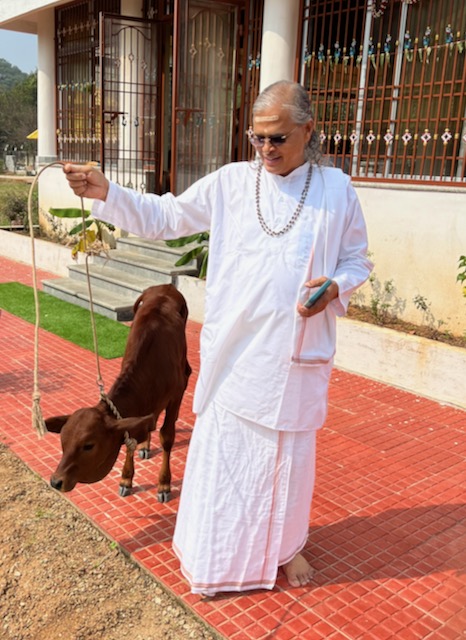
As the sea remains unchanged even after receiving all the waters, so also a man of equanimity continues to experience peace even when desires enter into him. This experience is not possible for one who is driven by desire.
Srimad Bhagavad Gita, Verse 117
The sea is already full with water. It is also completely stable, meaning it does not change its course or exceed its limit or overflow. The example of sea is given here for two reasons. One is its vastness, and second is its nature of not exceeding its shoreline or limit. Tsunamis and other things are very limited exceptions. This example of the ocean is used rather than a river because every year the river exceeds its limit and floods; it is a recurring phenomenon.
The sea is ever full of water and always stable, and never changes its course nor exceeds its limit, even though constantly receiving water from every source—not only from rivers, but also from drainages, streams and rain. Most of the rain goes to the ocean. Land receives twenty percent of the rain, and the remaining eighty percent falls in the ocean, because of the majority of the Earth’s surface is made up of water bodies. Only twenty-eight percent is land. As the ocean is always full of water and never exceeds its limit although continuously receiving water, so also one who is fully stable in experience is not at all perturbed even when all the desires enter. Only such a person can experience peace.
The word experience is used here in two connotations. One is experiencing the desire; the other is experiencing peace. These two experiences are different in nature. Desire-prompted experiences are all sensory in origin. You cannot have an experience that is not sensory in nature. Now you may, I am sitting quietly closing my eyes and the thought of my beautiful house and its garden, and all these beautiful flowers is coming to me. Which sense is this? It is the mind, and the mind is the king of the senses, so mind is also included in this category. As the king is also a human being, so also mind is called a sense organ, although it is the king of the senses.
Sensory experiences can never give saturation. They can give satisfaction, while denial of sensory experience can give dissatisfaction, and this dissatisfaction may be pain or sorrow. Any experience that is sensory in origin, that gives satisfaction or dissatisfaction, pleasure or pain, sorrow or happiness, is desire-prompted. We are sitting here in a closed room and our consciousness is not distracted anywhere else. We are not identified with what we are seeing, with the sense of touch, whether we are sitting on the hard surface or on a soft cushion, or with any outside noise. When you continue to experience this peace even when your senses are active, that is still higher peace, and when you will be able to retain that state of peace even when your senses are tormented, that is the highest type of peace. Like if you are feeling severe pain and your sense of touch is very agitated, but this pain is not so impactful that it will bring you down from your highest state of bliss. That is the state referred to here and that is the state to which Gita wants the seeker to reach.
The ocean that is already full with water: symbolically it means, this yoga is applicable to a human being who already has all types of experiences. This is the reason the yoga of Gita is not for children, nor for one who has not experienced all aspects of life. If I will teach this yoga of Gita to an adolescent boy, he may understand it fully, and he may have some sort of conceptual clarity, but he can never reach that state. The ocean must first be filled with water, and here water symbolizes the experience of man.
Experiences are recurring in nature. Lord says in this chapter, this experience comes and goes, endure it calmly. This refers not only to unpleasant experiences but also pleasant ones. If you are enduring them calmly it will push you beyond. Yoga is a constant forward march and a constant struggle to retain your state and not be thrown out of the track. When you are struggling like that it means you are fighting the battle.
This verse uses the attributes of the ocean—vast and full of water—to describe a person who has already experienced everything that is desire-prompted. Desire-prompted means that which is sensory in origin. That is why Gita yoga is for an adult; it cannot be for an adolescent. Adult means a mature human being, and maturity here does not refer to age, it here refers to experience. Mature means one who already has the experiences of all the five senses, the vital and the mind, and whose intellect is expanded. Such a person can practice the yoga of Gita.
The first condition is full with water, and the second is stable. The ocean is not only vast and full of water, but also it is unmoving, not changing its course. Waves come in the ocean, but only up to the shoreline. Beyond this wave will not come. Similarly, a person who has attained equanimity will respond and it may be with a smile, an embrace, a kick, shouting or an irritation, but it will not exceed the limit. Depending on the nature of the signal, a person of equanimity will respond. Whatever type of response is needed, only that type of response he will give.
If someone comes to hit him with a stick, a person who has attained equanimity will resist, because he has not lost his common sense. He may hold the stick, or may be able to snatch it away, but he will not hit back. You greet him and he will also greet you—he will not be stoic, he will recognize you and your greeting, but he will not be trapped by your smile. That is within the shoreline, like the sea is within its shoreline, firmly stable. A person of equanimity knows how to respond, how much to respond, when to respond and to whom to respond. That is not a violation of the equanimity state. The ocean has waves that rise and fall within its limit, but the ocean is firmly stable. So also a man of equanimity is stable and firm in his response. This firmness does not always mean roughness, rudeness or stoic neutrality. It is lively, but will not exceed the boundary line.
One who has not reached this state is called kaamakaami, one who is struggling for desire fulfillment and still desires desire. You cannot say, “I am aspiring that Swamiji should come with a bucket full of fruits so that we will eat.” That is not an aspiration. It is a desire. All desire is sensory in origin. All aspiration is extra-sensory in origin.
A desiring person can never experience peace, and even if he feels that he is experiencing it sometimes, it cannot be called peace, because when peace comes it never goes. Experience comes and goes, but peace comes and grows. It keeps growing to such an extent that it can grow no more. That is the state we call yoga siddhi, and that is what I call realization.
When you have realization, your experience cannot grow further because you have reached the state of unmoving and you are stable, like the infinity of the sky and the vastness of the ocean. In this vastness, waves and ripples come and go; that the yogi is able to experience.
Many people ask me what happens in these three to four hours when I sit in deep samadhi: “Do you go to sleep, or are you fully awake? Whether thought comes?” My answer is, “Thought does not come in the way that you understand what thought is. Awareness comes and goes.” It comes from nowhere, because you are awareness; you simply transcend the experience. When experiences are transcended you enter into awareness, which is all pervading. Experience is not all pervading, awareness is.
Unmoving and stable: unmoving means you are not going anywhere because you are everywhere. You have become awareness. Experience only comes and goes; it has a direction and a dimension, and it goes from here to there, to there, to there. Awareness has no direction. It only has dimension. Experience has a depth, but awareness has a height. It does not have any depth. A person of equanimity has dimension and height and although remaining on the desire plane, he is not in desire. Experiencing everything, identified with nothing, because he is in the state of stable peace. Such a person radiates the state of peace.
This is what the seekers experience when they come near an enlightened being. He may be just sitting, or doing his work, and you come and sit at a distance. After some time what you will experience that you are feeling calmness and silence. It is becoming deeper and stronger, and after some time it will be difficult for you to look towards the enlightened being or the seer, and you begin feeling drowsy. Many people feel guilty when they feel drowsiness but they should not, because that is a natural state. From waking state you go to dreaming state, from dreaming to sleeping, and from sleeping you go to transcendental state. Drowsiness will lead to sleep, so some people go to sleep. The person that disturbs another person who is in a drowsy state or is entering to sleep state, by saying, “Hey, don’t sleep here,” is creating a karma. Depending on the system of that drowsy seeker, the force that is transmitted from the seer is taking him to different zones. He should never be disturbed. If the person himself is becoming conscious that is a different thing, but you should not make another person conscious that is sitting in front of an enlightened being.
This is the reason I say to those who come to me, “If you feel sleepy, sleep. If you feel drowsy, let it be, don’t feel guilty.” Prakriti is pushing him to a state of sleep, because he is receiving more in that state. His consciousness was a parched land before. Now it will receive the drops, and after it absorbs them and becomes a wetland, the stream will flow. That is the secret.
One should be stable in awareness. If you are a poor man and you come near a billionaire, you will never experience that you have become rich. But whosoever has come near an enlightened being has certified that they experienced peace, joy, tranquility and calmness. A rich man cannot transmit the power of affluence. Only one who has transcended richness can transmit affluence. As the ocean is filled with water, a person that is in the state of affluence will feel affluence everywhere. This state of being a millionaire or billionaire is a state of consciousness only. If you reach that state of consciousness and you are able to remain there, then you have reached the state of the ocean: filled with water, unmoving and stable. Remaining in that state of consciousness, respond to prakriti. From my experience I am telling: remaining in the state of being, respond to the world of becoming. Discharge your responsibility in the state of the becoming, but remain in the state of the being. In Verse 214, Lord Krishna says, he who performs action being linked with Brahman is not contaminated by sin.
One who, like an ocean, has reached the state of stability and is full of experience, experiences peace. Not one who is still struggling for desire fulfillment, or who continues to hope for some desire-prompted experience. As long as there is any pull for desire-prompted experience, one will not experience that unbroken stable peace. That is the highest state, Verse 117, and if one is able to maintain that state, one is established in Brahman. This is one of my favorite verses in Gita.
[From a 2010 Interaction at Satyachetana Ashram, Tiruvannamalai, India]
Omm Namo Bhagavate
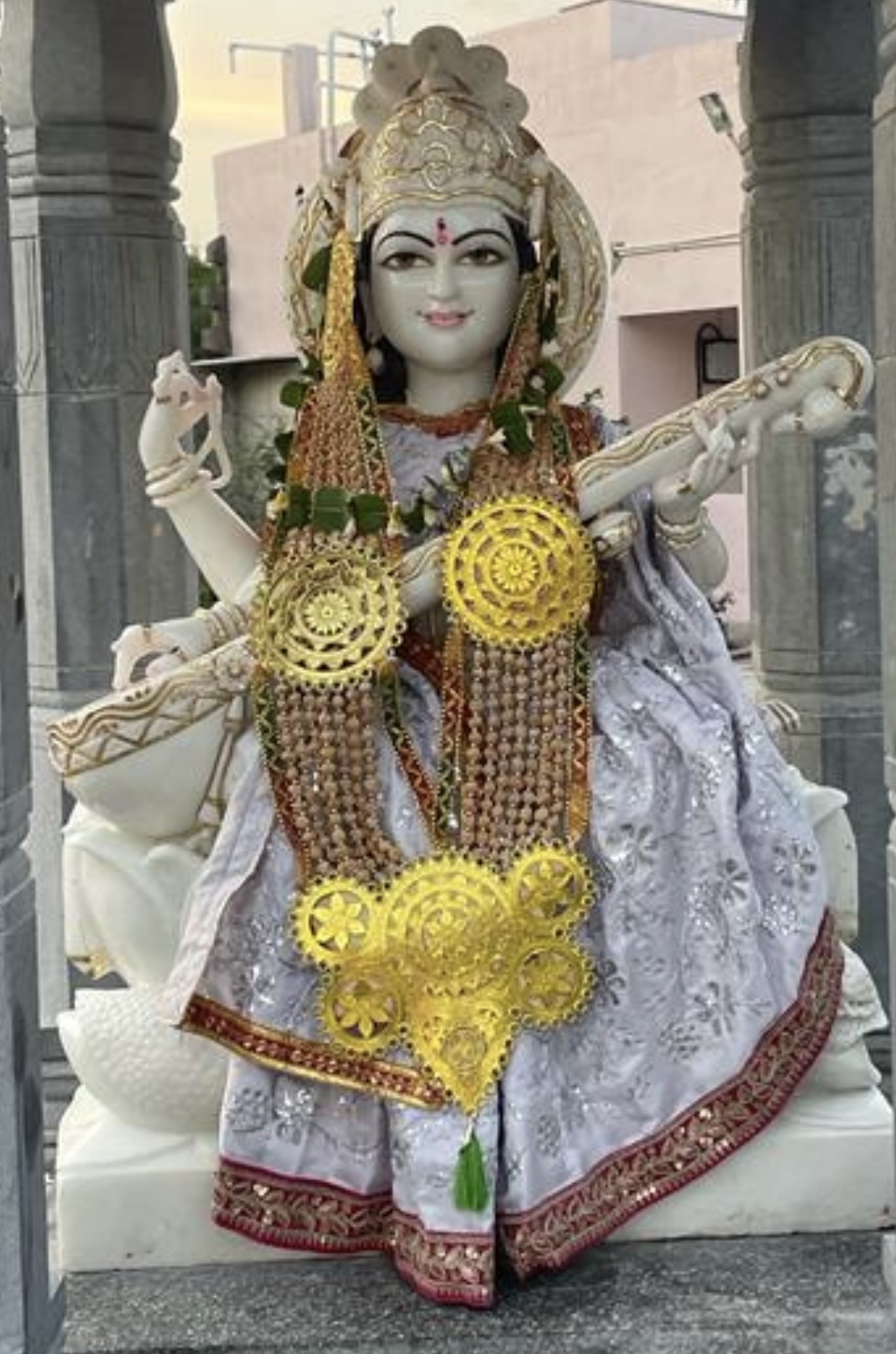
Blessed Yogis,
I know that some of you are determined to reach the goal during this lifetime. And I also know that some of you are more determined than I am that you should reach the goal. There are also some who are as determined as I was during the time when I was consciously doing yoga sadhana. Since I am going to share with you all my life’s experience, I want to first assure you of one thing, that I will speak the truth and only truth, and only those things that I have truly experienced. I am going to open up everything and share all. If you have any questions after reading this journal of my sadhana life, you can ask me and I promise to answer truthfully. I believe sharing is true guiding.
My life is an open book, but please remember it has a cover page too.
This is how I begin.
What was my goal when I consciously began my journey?
I cannot be sure when I began my journey. Maybe it started from my last life because many things I attempted, I easily achieved. In yoga you cannot have easy victory unless you have really put in a lot of practice before. This is the reason I feel my journey began long ago, before I knew it.
However, when I consciously began my journey, I fixed a goal before myself: to win over the six enemies in the yoga path. These six enemies are kama, desire; krodha, anger; lobha, greed; moha, attachment; mada, egoism or I-ness; and maschharya, gossip and negative discussion about others.
To be very frank, in those initial years I did not care about God, nor did I care for any realization. To me the world was beautiful, family was joyful and life was challenging. I wanted to see this beautiful world, experience the joys of family surroundings, and be successful in everything I sought to do. Thus, life for me was just like that. Common. I did not see myself as uncommon but I was feeling something different from other children of my age.
When did I start my Journey?
I would say my conscious sadhana began around my 8th standard in school, when I was 14 years old. Perhaps it began in the summer vacation of my 7th standard. My exams were over and I was waiting for my results and thinking a lot about high school.
How did it begin?
A sadhu had come to our village and was staying in our other house at the end of the village. This house was built by my father just for visiting saints and sadhus. I noticed that the sadhu was receiving royal treatment from all the villagers, especially my mother. I felt she was paying much more importance to this old man with his long beard and ochre robe than she paid to me or to my father. She insisted that all food must first be offered to this sadhu. Then only we were allowed to eat it. She also made it compulsory for me to go and serve the sadhu, clean his house, wash his clothes, and even massage his feet, which were definitely dirty and ugly. I thought, “What is this old man having that everybody gives him so much importance?”
One day I asked the sadhu, “Do you know algebra?”
He looked at me and had a big laugh. “I have no need for it,” he said, while handing over his dirty clothes to wash. As I was washing them, I thought, “Let me find out what he knows.” I brought the clothes and asked, “Do you know English?”
He again laughed and said, “I have no compulsion to know that.”
I asked, “Do you have money? How much do you earn every month?”
This question made him laugh and laugh and laugh. I felt as if he was not going to stop. Suddenly he became serious and said, “All money of all people belongs to me. I have no need to earn it or keep it. I have everything.”
This answer made me angry and I asked, “Then why do you beg for food? Why do you not have enough clothes? Why do you sleep on the floor? You poor man. You do not know algebra or English. You have no money but you receive the attention of all? What is it you have that I do not have and my parents do not have? Why should you be served food first, even before my father? You old lazy man, I am not going to serve you.”
After vomiting these words, I felt very uncomfortable, almost crying. I did not know why, but I felt as if I had made a big mistake. But the sadhu was not only calm, he was smiling.
He came towards me, lifted me in his arms and said in a most loving voice, “Dear child of God! Your words have not in any way hurt me. I do not need your services. I also do not need to eat first. From today, I will ensure that you are eating before me.”
Instantly I realized that the sadhu had something extra that I did not. What it was, I could not determine.
I was afraid that my mother would shout at me. I thought, if the sadhu reports to her, then she will not only rebuke me, she will immediately stop eating food for several days to neutralize my sinful act. It is not my mother’s anger, but her penance that was frightening for me. On several occasions I had seen my mother stop eating in order to neutralize any bad karmas of her children.
As a child I was disciplined not by fear of punishment but by the fear of being the cause of my mother’s fasting. Naturally at that stage of life, eating delicious food was the most attractive reward for me and being denied that was the worst punishment. From this I can safely conclude that I was an ordinary child, like many of my age group.
One day, long after the sadhu had gone from our village, when my mother was in a good mood, I asked, “What is the specialty of that sadhu to whom you gave so much importance? In what way is he superior to you, Mother, and also in what way is he more knowledgeable than me? He does not know algebra and cannot speak even one English word. Why should he receive so much importance?”
I told her how the sadhu did not have a single penny with him but was boasting that he is the owner of all wealth.
My mother looked at me in disbelief. She could not imagine that I had asked these questions to the sadhu. She told me in a serious tone, “First, go and eat tulsi leaves. Your mouth is spoiled from criticizing the sadhu. First cleanse it.” She was demanding and I had to obey lest she would declare a two-day fast.
Immediately I ran to the back yard and brought several tulsi leaves and ate them in front of my mother to make sure that my bad karma was neutralized. Then she became relaxed, although not comfortable, and said, “The sadhu has six great siddhis which none of us have. That is why he is receiving everything without asking for anything. To have attained those siddhis, he must have done severe tapas, austerity. He has divine powers and he talks with God directly every day.”
With a sense of disbelief, I asked, “Then why is he not asking God for food, and to teach him algebra and English?”
My mother laughed at my foolish question, but because she was in a good mood, she did not shout at me. She simply said, “Sadhus have no need to ask anything of God. God ensures everything for them. They also have no need to study algebra or speak English. Those who cannot talk to God need to earn money, study algebra and speak English.”
My mother looked at me and said with a commanding voice, “Don’t you see? Even if you demand, you do not get everything, and the sadhu gets everything even if he never asks.”
I asked my mother in a penetrating voice, “What is it that this sadhu has attained? Please tell me and I will attain that.”
My mother was stunned. She said, “He has conquered kama, krodha, lobha, moha, mada and maschharya. Can you conquer these six enemies?”
I told her, “Definitely in this life I will do it. I swear in your name, my loving mother, I will conquer these six enemies before you leave your body.”
She simply looked at me in disbelief. She was moved. Tears started flowing from her eyes. She put her hand on my head, took me to her lap and said, “I believe you can.”
To be continued….
Omm Namo Bhagavate
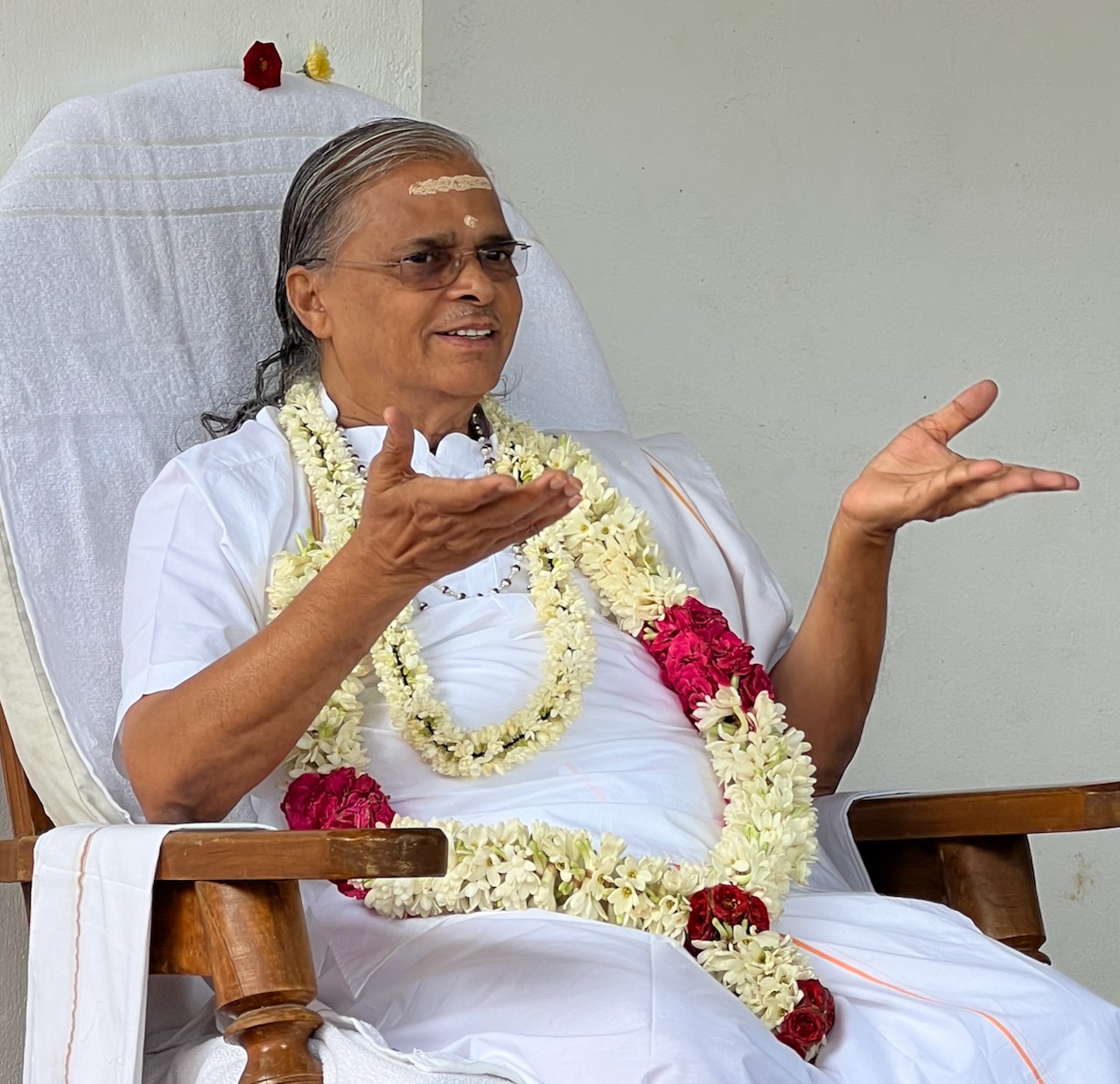
Here is the recording of the morning message from Swamiji on Guru Purnima, 13 July 2022, spoken at Satyachetana Ashram, Tiruvannamalai, India.
Omm Namo Bhagavate
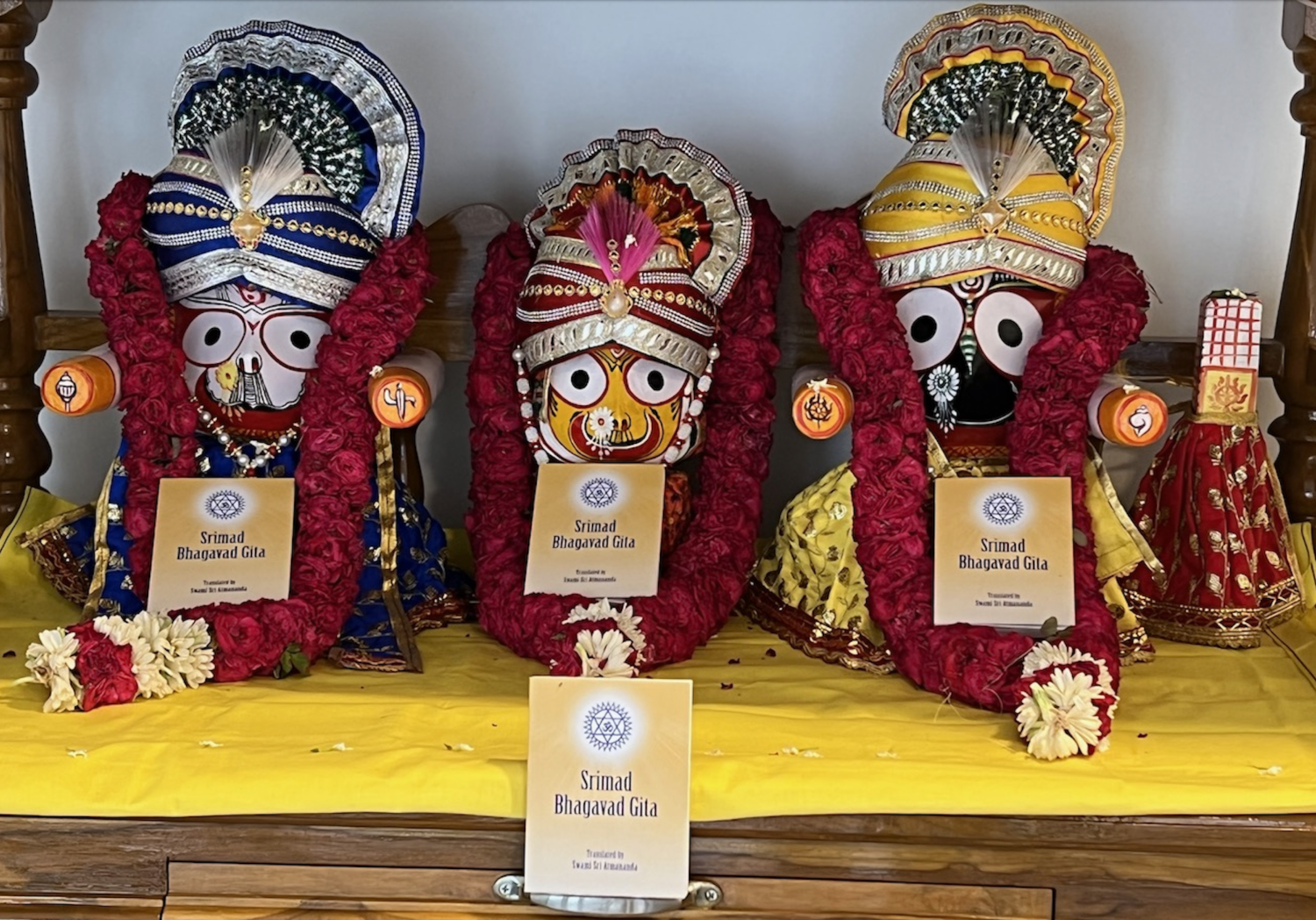
After a delay at the press, the printed copies of Swamiji’s newly revised Bhagavad Gita translation arrived just in time to be offered to the deities during the inauguration of the new Jagannath temple at Satyachetana Ashram, Tiruvannamalai, India. To be precise, the translation is actually not “by” Swamiji, in his view. He explains that it was revealed by Lord Krishna through Swamiji.
Worldwide orders will begin shipping the week of 4 July. The book is available from Satyachetana Publications here.
Omm Namo Bhagavate

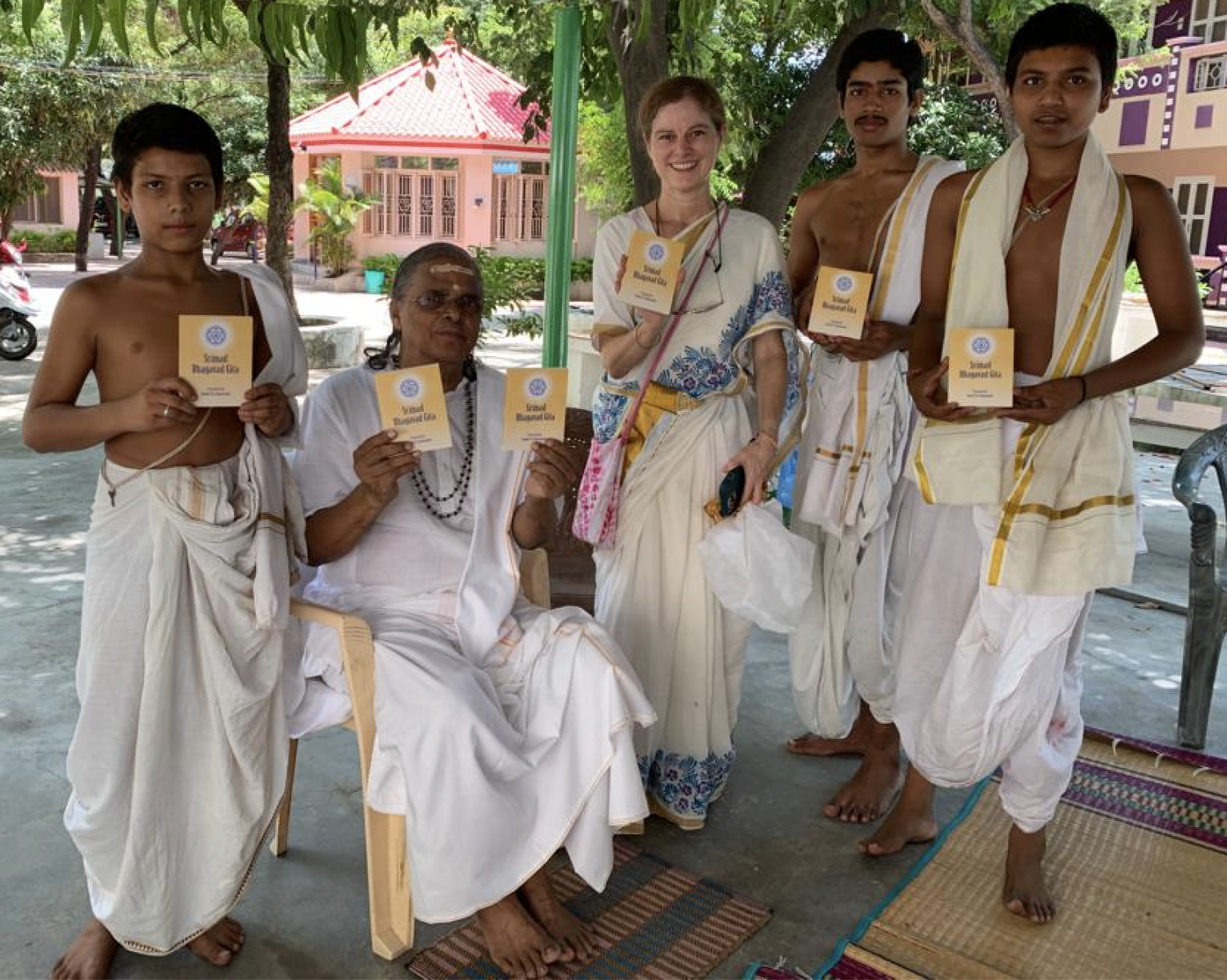
Two messages from Swamiji on the morning of his 71st birthday, 18 June 2022, spoken at Satyachetana Ashram in Tiruvannamalai, India.
Early morning:

After Guru Puja:
Omm Namo Bhagavate
Prakriti is said to be responsible for cause and effect and the sense of doership, while purusha is said to be the cause of the experience of pain and pleasure.
Srimad Bhagavad Gita, Verse 509
This verse can be interpreted as discussing action and the cause of action, or action and the different means or instruments that are needed for performing it. The source of both action and its cause is prakriti, or nature. Purusha, the soul, has nothing to do with action, nor with the factors responsible for the success or failure of the action. However, purusha is responsible for the experience of happiness and sorrow, because purusha experiences the result of action.
Since purusha is the enjoyer of the result, or the fruits of action, purusha experiences sorrow or happiness, success or failure, fame or defamation, and gain or loss. Prakriti does not experience any of these, because prakriti herself is the experience. Purusha is the experiencer. The title of this chapter means, the difference between prakriti and purusha, or the difference between the field and the knower of the field.
Anything that happens in the material plane is governed by the law of nature—the law of prakriti. Prakriti, not purusha, decides what will be the nature of the action, and prakriti’s responsibility is to ensure that the action is successful. Thus, prakriti will arrange all the factors that are necessary for the accomplishment of the action. Purusha is always a non-doer; purusha’s action begins only when prakriti’s action ends.
Prakriti’s role is to activate the process of action and then to ensure that the result comes. When this process is completed, purusha experiences the result and pronounces the judgment as to whether it is good or bad. Pronouncing this judgment is not necessarily a problem. The purusha gets clouded only when it gets identified with the process of prakriti. If purusha is not getting identified with the result—that is, what the purusha is experiencing—and is not identified with the process of how prakriti is doing it, then purusha can maintain his state of equanimity.
As a result of the action, purusha goes through happiness and sorrow. These come when the purusha attributes some qualification to this experience: “I should experience it more; I should experience it less; I should not experience it at all.” When any qualification is added to the experience, it no longer remains as experience—it becomes enjoyment and the purusha becomes contaminated. That is, the awareness gets contaminated with experience, and instead of only experiencing the result, the purusha also experiences sorrow and happiness. The root of all clouding, veiling, and contamination comes when the purusha begins to enjoy rather than experiencing. As a result, purusha falls one step further below. This is revealed in Verse 510.
Prakriti is the agency. She decides what will be the action and the nature of the result. This is done for purusha because purusha, the pure awareness, the being, wanted to experience the becoming. The being is awareness; the becoming is experience. The awareness wanted to experience the manifest part. The unmanifest purusha wanted to experience its manifest attributes. That is how the whole process starts. While experiencing it, the purusha gets identified with the attributes, and the veiling mechanism begins.
Experience itself is not bad. Getting identified with the experience is the root of all problems. Gita does not say, ‘Don’t experience.’ Gita says, ‘Experience but don’t get identified with the experience, and don’t qualify or quantify it.’ If you do, you will become stuck up with the triple veil of sattwa, rajas and tamas. You will be trapped; you, the awareness, will lose your awareness and be identified with experience. The coating will begin, and a time will come when you will be experience only, without awareness. The way out was shown to the yogi long back in the fourth chapter, when the Lord said in Verse 214, ‘Keeping your consciousness fixed on the Absolute, if you are only responding and experiencing, not enjoying, then your awareness will not be contaminated. You will float like the lotus leaf floats on water.’
Prakriti is always eager to activate the desire process within the purusha and ensure that the purusha gets trapped by his desire. All the signals to purusha come from prakriti. The moment purusha shows a special interest, prakriti is ready to fulfill it, and grant the desire. That is how prakriti wins. The whole process of yoga is nothing but understanding this play. Prakriti loves to veil the purusha; purusha loves to maintain his awareness. If purusha remains in pure awareness, prakriti is miserable because she feels she has no purpose, so prakriti will want the purusha to be fully veiled. Whereas purusha struggles to maintain its awareness so that prakriti will be under control. Once purusha gets identified, prakriti traps the purusha and awareness gets clouded. This clouding, veiling and contamination with the attributes of prakriti is the cause of purusha repeatedly taking birth in good or evil wombs.
The secret of how purusha can maintain its neutrality even while ensuring total involvement in prakriti’s play is revealed in Verse 511. The origin appears in 509 and the process of veiling is explained in 510. The solution comes in 511, which says the purusha should always remain a perfect witness: remaining very near but retaining the state of witnessing. This witnessing state is possible when there is a distance between the subject and the object, that is, a gap between the senses and the object of senses. Purusha is witnessing, while prakriti is watching purusha, because it is just a matter of time before purusha will be completely caught in her web. Prakriti watches how purusha enters into the trap.
Gita says purusha should develop the strength to witness prakriti’s play while remaining very near. In yoga, when somebody is heading towards Self-realization, the first attainment that comes is the witnessing state. The second is giving consent. As prakriti is preparing the rope to bind the purusha, purusha is remaining very near and watching—neither interfering, nor asking why prakriti is doing this. Purusha simply gives consent without opposing in any way: “Yes, prakriti, what you are doing is fine. Do it.”
The third quality is to support prakriti. Suppose prakriti is not capable, and needs help to prepare the rope. Now she will look at the purusha and the purusha should give her the strength. Here, purusha is the sustainer. When the purusha is able to complete these three stages, prakriti will complete her work. She does it all for purusha, and offers everything to the purusha only. If there is no purusha then prakriti has no purpose: “Without him I exist not…” Wherever there is prakriti there must be the purusha.
Prakriti means action, and action must have a purpose and a cause. Prakriti’s only purpose is to offer it to purusha. That is why every action in the ultimate stage is nothing but an offering at the feet of the Lord. The more one proceeds towards perfection in yoga, the less he feels the prompting to do anything. A time comes when he becomes the perfect non-doer. He just lives like a statue because the prakriti within is completely swallowed up by the purusha; that is, the experiential urge is completely swallowed by awarenessional height. The more you reach awareness, the less you will feel the need to perform any action. The reason these saints and great souls don’t perform material action is not because they are lazy, but because the urge is not there. The prakriti within is completely encircled by the awareness.
Prakriti’s purpose is to prepare it, perfect it and then offer it. Until it is offered, prakriti is not at peace. Once it is offered, the purusha is supposed to experience it, so you cannot refuse anything that is coming to you from prakriti. You should respond, because whether it is happiness or sorrow, profit or loss, fame or defamation, good or bad, pleasure or pain, it came to you because you wanted it. Everyone is responsible for what he gets. There is no third person. Find out from within why something is happening to you. Instead of finding the cause outside, the seed must be located inside. That is the highest state of jñana. If you have transcended maya, you will be able to clearly see that the signal is not directed towards you, it is directed to someone else and prakriti just wants to use you as a postman to deliver the news.
From witness to consent-giver to sustainer or giver of strength. Next is accepting it. In the second chapter the Lord says to endure these experiences in a state of perfect calmness, because through that prakriti is pushing you beyond everything. Only a jñani can see that. If you pass through these four stages and you are still able to retain your awareness, then instead of being the slave to your prakriti, you become the Lord of your prakriti. Ultimately you reach the state of the Supreme Being: capable of retaining the state of pure awareness even while experiencing everything. When you become the Lord of prakriti, in traditional yoga you are called a Swamiji. That means you are capable to witness, give consent, support and go through all experience, without losing your awareness. A perfect Self-realized being is called a Swami. As a mark of respect the suffix -ji is added to make it Swamiji.
The first part was sadhana for realization; the next part will be the struggle for manifestation. When the yogi is able to withstand the holocaust of the outer prakriti then he becomes the Supreme Being. Gita’s sadhana is these steps: witness, consent-giver, sustainer, enjoyer, and then the Lord of the individual prakriti. Last is the Supreme Being. This purusha, this embodied being, should pass through all these stages while remaining in this body. Gita does not accept that sadhana is finished after attaining Self-realization. All five of these stages must be completed. Then only will the purusha will become the supreme purusha, the Supreme Being.
The first challenge is reaching the witnessing stage. Remaining very near to the object of enjoyment but not jumping into it is possible only if the yogi has perfect control of the senses and the mind. That is why practice is necessary. If the senses are completely disciplined, they will not run towards the object because the mind will keep them under control. Mind will be under control if it is under the command of the intellect, or buddhi. Intellect will be stable only if it is linked with the being. When the intellect is linked with the being, and becomes constantly stable like the being, that is called equanimity. Whatever may be the outer turmoil or outer attraction, one is able to retain the awareness that, “No, I am not supposed to descend beyond this limit.” When a yogi knows how much to descend and where and when to stop, it means some level of the equanimity state has been attained. Otherwise it is not possible. Without attaining equanimity the yogi will completely fall.
The yogi should always focus on reaching the state of the Supreme Being in this life, before dropping the body. This should be the goal, not liberation, nor Self-realization. The yogi must be mentally prepared that to reach the state of the Supreme Being, he has to go through these five stages.
The witnessing state will come if there is constant sense control. Sense control will come only if you are remembering your goal. If you do that you will be able to discriminate how much to experience and when to stop this experience. This is how the senses will be brought into moderation, mind will be linked with the intellect, and the intellect will guide you. Mind does not give you clear-cut direction. It is like a monkey. Don’t rely on the mind; rely on your intellect’s sense of reasoning. Intellect will guide you correctly if it is linked with the being. If intellect is linked with the becoming, that is, the outer world, then you can never receive inner guidance.
The yogi must focus on the goal. The witnessing stage must give way to the state of consent-giver. Then the supporter gives strength to prakriti. Remember always, prakriti has only one role: to veil you, trap you and contaminate you. However, prakriti needs support because purusha is the strength of prakriti. Without purusha, prakriti is crippled, so you give the strength to enable prakriti to accomplish her task. Then prakriti will offer it. Offering is not an action; it is a transmission. If you are offering to me, I must feel it. No need of me knowing it. Offering will not come until there is reverence, a feeling from the heart. Until then, it is an act of giving, and through every act of giving comes the rope of binding.
If you view yoga from a serious perspective it is like walking on the razor’s edge. How you see it depends on the state of your evolution in spiritual consciousness.
Before you reach the state of the Supreme Being and attain the goal of Gita, you must first reach the state of the being, that is, the swami state. Prior to that, you are experiencing everything without enjoying anything. Except for the forms of the guru and the enlightened ones, every other form in this creation is first the instrument of yogamaya—whether it is your mother, wife, children, friend or well-wisher. Otherwise this game cannot be so prolonged that life after life the being keeps getting veiled and trapped. When the yogi understands this he runs away from society. That is called dispassion, when one runs away from passion. But that is only a stage. That stage may then be neutralized, because remaining inside a jungle or a cave you may again develop passion for something or someone.
It is of utmost importance to remember the five stages one has to go through, and you must pass through these while you are in this body. Those who say they are doing yoga to attain liberation don’t know what they are saying. Liberation means to first be liberated from the clutches of your individual prakriti, like desire, anger, greed and faultfinding, then to be liberated from prakriti’s triple veil of sattwa, rajas and tamas. When you become liberated you will reach a state of perpetual delight. If it is a static delight you are simply ananda, not having anything to do with anyone in this world, simply existing in a state of pure bliss. However if it is a dynamic delight, you have everything to do with everyone in this world. That’s the state of satchitananda: you are living in the body for ensuring the welfare of the whole creation. Whether you have anything or nothing or everything, your state of inner bliss remains.
Verses 509, 510 and 511 deal with the cause and process of veiling and the secret of how to be released from this veil. The cause of veiling comes in 509, the process of veiling appears in 510, and the key to unveiling is revealed in 511. The cause of veiling is that the purusha, instead of experiencing, begins to enjoy. Next the process of veiling begins, because by enjoying rather than experiencing, the purusha feels identification with the gunas of prakriti. Then the veiling process intensifies. The veiling process began with 509 and intensified with 510, and the unveiling process begins with 511. When the purusha reaches the state of the great Lord, the veil falls apart. Finally, the state of the Supreme Being means consciously putting on the veil but playing the role. That is the secret.
Chapter 13 contains the entire secret of manifestation. That’s why from Chapter 13 to 18 is the manifestation part. It has to be contemplated word by word. Go deeper and deeper. Then you can know where you are stuck up.
[From a December 2010 Interaction at Satyachetana Ashram, Tiruvannamalai, India.]